Languedoc
The Life and Opinions of Tristram Shandy, GentlemanLanguedoc is the setting for a decisive change in the narrator’s journey: after his carriage is wrecked, he abandons the hurried pace of the post-road for a mule and proposes to cross the region slowly. Its broad, fertile plains seem at first to offer little to a conventional travel writer, but the narrator turns them into a scene of continual human contact. Languedoc thus becomes not merely a stretch of country between the Rhône and the Garonne, but a test of how travel writing makes a place meaningful: where a guidebook sees monotonous abundance, an alert and digressive traveller finds company, incident, and narrative life.
Setting and Route
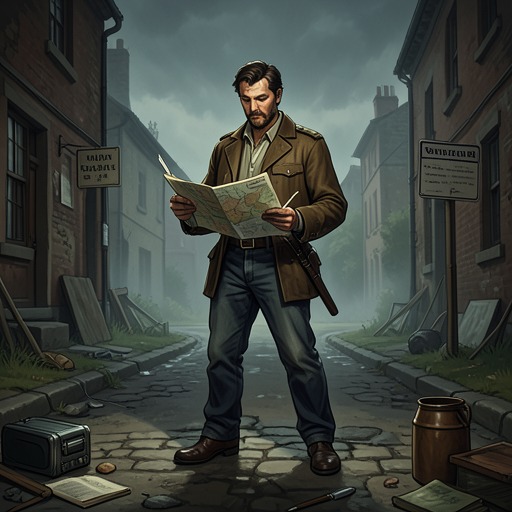
The narrator describes the south of France between the banks of the Rhône and the Garonne as territory he can traverse at leisure on his mule. That leisurely pace follows the wreck of his chaise at Lyons. At first he treats the accident as an unexpected advantage: he expects to travel by water to Avignon for seven livres, then hire mules or asses to cross the plains of Languedoc, saving four hundred livres and gaining a pleasure he values at twice that amount. The imagined route carries him down the Rhône, past the ancient cities of Vienne, Valence, and Viviers, with the landscape opening onto vineyards, castles, rocks, mountains, and cataracts. The prospect is a fantasy of swift movement and renewed energy, even as the damaged chaise and the actual journey force him toward a different pace.
That change is not simply a matter of choosing a more picturesque route. The narrator says he changes his mode of travel again despite the post-office commissary’s advice, replacing a “precipitate and rattling” course with the slow progress of a mule. The journey through Languedoc therefore sets one form of travel against another: speed and regulated stages give way to a pace that permits stopping, talking, and noticing. The mule is the practical means of crossing the region, but its slower movement also makes the narrator’s open-ended itinerary possible.
The Plain and Travel Writing
The narrator singles out a large, rich plain as pleasing to a traveller but alarming to travel writers. Especially when it has no great rivers or bridges and offers the eye an unvaried picture of plenty, it resists the usual descriptive sequence: praise the soil, call the view delightful, then move on to the next town and the next plain. Such stock judgments leave the writer with a landscape that has been named but not made vivid. The narrator’s satire targets not the plain itself, but the formulaic account that treats its fertility as a complete description and its only purpose as passage to somewhere else.
He presents the plain as a challenge to narrative rather than as empty country. The apparent lack of variety belongs to the conventions of the travel account, which can repeat a small set of approving terms and then move on. In contrast, his account makes the plain a place where events and connections accumulate. The difference is formal as well as geographical: a route that would ordinarily serve as a transition between towns becomes the material for an extended, episodic narrative.
Company and Encounters
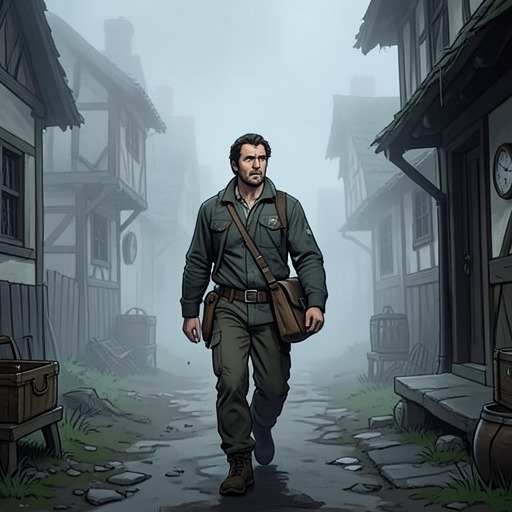
The narrator calls his passage across the plain the busiest and most fruitful period of his life. He had made no agreement with his armed attendant about time, so he stopped to speak with anyone who was not moving at a full trot, joined groups ahead, waited for people behind, and hailed travellers at crossroads. He also detained beggars, pilgrims, fiddlers, and friars. His description presents the journey as a practice of accepting opportunities for conversation rather than keeping to a timetable.
The encounters are deliberately varied and often initiated by the narrator. He does not pass a woman in a mulberry tree without praising her legs and trying to draw her into conversation with a pinch of snuff. The detail shows how his willingness to seize an opening animates the route, while also preserving the narrator’s comic, self-regarding view of his own sociability. His mule, he adds, loves company as much as he does and has proposals to make to every beast it meets. Together they could, he imagines, spend a month in Pall-Mall or St. James’s Street and still have fewer adventures or see less of human nature. The comparison makes the rural road, rather than the fashionable streets, the more fertile setting for encounters.
A Region Made into a City
The narrator summarizes his method by saying that he has turned the plain into a city. The transformation is not a literal change in the landscape: it is the result of stopping, joining, waiting, greeting, and conversing. A country road that might have served travel writers as an uneventful stretch between destinations becomes crowded with social variety because he treats chance meetings as material for the journey. The plain’s fertility is therefore both agricultural and narrative: what appears to be an unchanging scene becomes productive through attention and movement.
He also idealizes the frankness he associates with Languedoc’s inhabitants, imagining it as a simplicity celebrated by poets of an earlier age. His account signals that this is an indulgence of his own fancy, not a detached description of regional character. That qualification matters: the narrator’s Languedoc is built partly from encounters, partly from interpretation, and partly from openly acknowledged imaginative projection. The region’s narrative significance lies in this unstable mixture. It exposes the distance between what a traveller directly experiences, what a travel writer conventionally claims to know, and what a narrator creates by following the opportunities of the road.